
Nonprofit Management
AI for Nonprofit Fundraising: Where to Start and What to Avoid
Why a Fundraiser Who Spent 20 Years Raising Money Wrote a Book About AI
Nathan Chappell has started and sold two tech companies, spent roughly 20 years in the nonprofit sector, and, in his telling, became disillusioned around 2017 by how little our sector innovates. He joined Trevor Nelson on the Hey Nonprofits! podcast to explain why he now thinks nonprofits are facing their toughest headwinds at the same moment they are getting the most powerful tool anyone has built.
His background matters to the advice. Back then he was leading fundraising for an organization that raised about $175 million a year, and the mandate from the CEO was to grow revenue by 25% without hiring more people. That, he said, is the moment you have to rethink everything, because incremental changes do not work in an exponential age.
If you are a development director with a flat staff and a growing goal, that is probably your situation too. What follows are the parts of his conversation with Trevor that you can use.
The Metric That Punishes Innovation
Nathan argued that nonprofits have been measured for decades by cost per dollar raised, and that the measure quietly discourages risk. If you are trying to keep your cost at 17 cents on the dollar and you get penalized for hitting 18, you will not experiment. In his words, if you are measured on filling a leaky bucket, you will trade revenue for relationships all day long.
He tied that to a number that should worry every fundraiser. When he started fundraising, he said, about two-thirds of Americans gave to charity. Today it is 46.8%. Total dollars may be up, he said, but that reflects growing wealth and inequality, not broader participation. His point is that a strategy built on raising more money from fewer people eventually runs out of people.
Two Kinds of AI, in Plain English
Trevor asked Nathan to explain the basics for anyone who is still nervous about the whole subject, and the answer is worth keeping. Nathan uses a toolbox analogy. You have a saw and a hammer, and each is good for a different job.
Predictive AI is the older tool. It looks at a mountain of data and tells you which handful of items deserve your attention. Think of a phone company working out which customers are most likely to upgrade, or the way social media decides whether you will like the next video. Nathan describes it as analytics on steroids.
Generative AI is the newer tool, the one behind ChatGPT, Gemini, Claude and similar products, which took off after late 2022. Instead of narrowing information down, it creates more of it: drafts, summaries, personalized messages. His shorthand is that predictive AI creates specificity and generative AI creates action. Used together, the first tells you who to talk to, and the second helps you say something that sounds like it was written for them.
What the Data Said About Who Gives
One of the more useful parts of the interview is what Nathan's team found when they ran their first predictive model in 2017. Looking at tens of millions of constituents, of whom only about 2% had ever given, they tested the old assumption that wealthy people are better donors. Wealth turned out to be less than 10% indicative of whether someone would make a gift. Altruism and wealth are different things. Wealth tends to affect how much someone gives if they are generous, but it does not tell you whether they will give at all.
He pointed out that more than 80% of nonprofits still raise money by prioritizing wealth screening and putting everything into that basket, and he linked that to the churn and disenchantment the sector sees.
The second finding speaks directly to event fundraisers. Across the nonprofits his team has modeled, Nathan said, attending a third event in a row is the strongest predictor that a person will ever make a major gift, and there is no further incremental lift after that. His explanation: the first invitation is a friend's. The second is curiosity. By the third, the person came on their own, has heard the stories, and the organization is becoming part of their identity. He added that for most of his career events were talked about as a necessary evil, and the data convinced him he had underestimated them. Treat that as his observation from the organizations he has worked with, and check it against your own attendance records.
If you can export attendance and giving history, look at how donors behave after their second and third event. You may find the same pattern in your own data.
Stop Asking Everyone. Find the Right People First
Nathan borrowed a lesson from the private sector. A major shoe brand, he said, once measured success as selling a pair to everyone on the planet. Over about 15 years that changed to caring about a specific group of people likely to buy this pair, the next pair and a third, and who would tell their families. His team's conclusion was that it did not matter how much they asked, when, or in what way if the person was never the right person to begin with.
That is the practical case for predictive tools. You do not need a data science team to apply the idea. Even a simple review of who has given more than once, who has attended events, and who has opened your last five emails is a smaller, smarter list than your whole database.
You Are Competing for Connection, Not Dollars
Nathan's keynotes center on an idea he calls competition for connection. People have a biological need to belong and to give, he said, and that need can now be met by a for-profit brand with a strong community, or by a crowdfunding platform that processes a transaction every second. The question for a nonprofit is whether it amplifies a person's generosity or becomes a barrier to it.
He recalled hosting a community night at a Boys and Girls Club about 20 years ago, with a donated video game setup and hundreds of kids and neighbors cheering in a gym. His point is that nonprofits already are the community and have forgotten it. The pendulum swung toward data and transactions, and he believes it is swinging back. For event teams that is encouraging news. A room full of people who care is the thing for-profit brands are trying to manufacture.
Most Staff Are Already Using AI. They Just Are Not Telling You
Nathan said that in his interviews and in a survey of nonprofit professionals, most of them are already using AI, but quietly. He called it shadow AI. People are doing it under the table because their leader has not said anything about it. The fear is understandable: reputational harm, authenticity, and environmental concerns, some of which Nathan called valid but manageable.
His advice to leaders is to say it out loud. You do not need all the answers, but you can tell your team that AI is part of your future and you are going to figure it out together. He predicts that organizations using AI will pull away from those that do not, and that individuals who use it well will get promoted past those who do not. He called the gap a digital chasm.
Having worked with about 150 of the top nonprofits in the country on predictive AI, he said success or failure had very little to do with data and models and everything to do with people and culture. His top trait is curiosity, and he would hire a curious generalist over a subject matter expert.
How to Start This Week
Trevor pressed Nathan for practical steps, and the answers are modest. First, choose a tool and stay with it. Nathan said the major assistants are all built on similar architecture and trained on similar data, and the differences are like brands of bottled water. Try a few, then settle on one, because it will learn more about you and your voice the more you use it. He recommends paying for the roughly $20 a month version if you care about data privacy, on the principle that if you are not paying for the product, you are the product. The specific features of each tool change quickly, so check current details before you decide.
Second, pick a small problem. Nathan suggested a low-stakes, high-reward task you dislike doing, then describe the problem to the AI and ask for ways to approach it. Assume it can help until it proves otherwise. Trevor's own experience matches that. He uses AI to get a blank page about 60% filled, then adds his own language, because he does not want his messaging to be 100% AI-generated.
He also cited research from Harvard and Procter & Gamble, as he described it, in which people working with AI finished faster, produced more accurate work, and reported the same emotional benefit as working with a team. For a solo fundraiser or a one-person marketing department, that last point is worth noticing. It does not replace colleagues, but it can make a lonely job feel less so.
Third, remember that it is the worst it will ever be today. Nathan pointed out that what generative AI could do in 2022 looks primitive next to current tools. People who tried it once, were disappointed, and walked away are working from outdated information.
Finally, know when to say no. As AI shapes more of the sector's work, Nathan said, nonprofits will be offered plenty of options that are not aligned with their values, and saying no will have to become a habit. He also believes the sector has a moral stake in what AI becomes, since the people who work in nonprofits tend to hold a view that life is about more than consuming.
A Short Checklist for Your Team
Ask your staff, without judgment, which AI tools they already use. Write down two or three tasks that would be safe to test. Pick one tool for 30 days. Set a rule for what you will not do, such as pasting donor records into a free tool or sending anything untouched by a human. Then review what worked. If you want a community to learn from, Nathan mentioned that the open-source group fundraising.ai had about 15,000 members from nearly 110 countries at the time of the interview.
You do not need an AI strategy before you start. You need one small experiment, a rule about donor data, and a manager who says it is okay to try.
Insights in this article are drawn from the Hey Nonprofits! podcast “The AI Breakthrough That Rewrites Every Rule of Fundraising”, featuring AI and fundraising author Nathan Chappell.
About the author
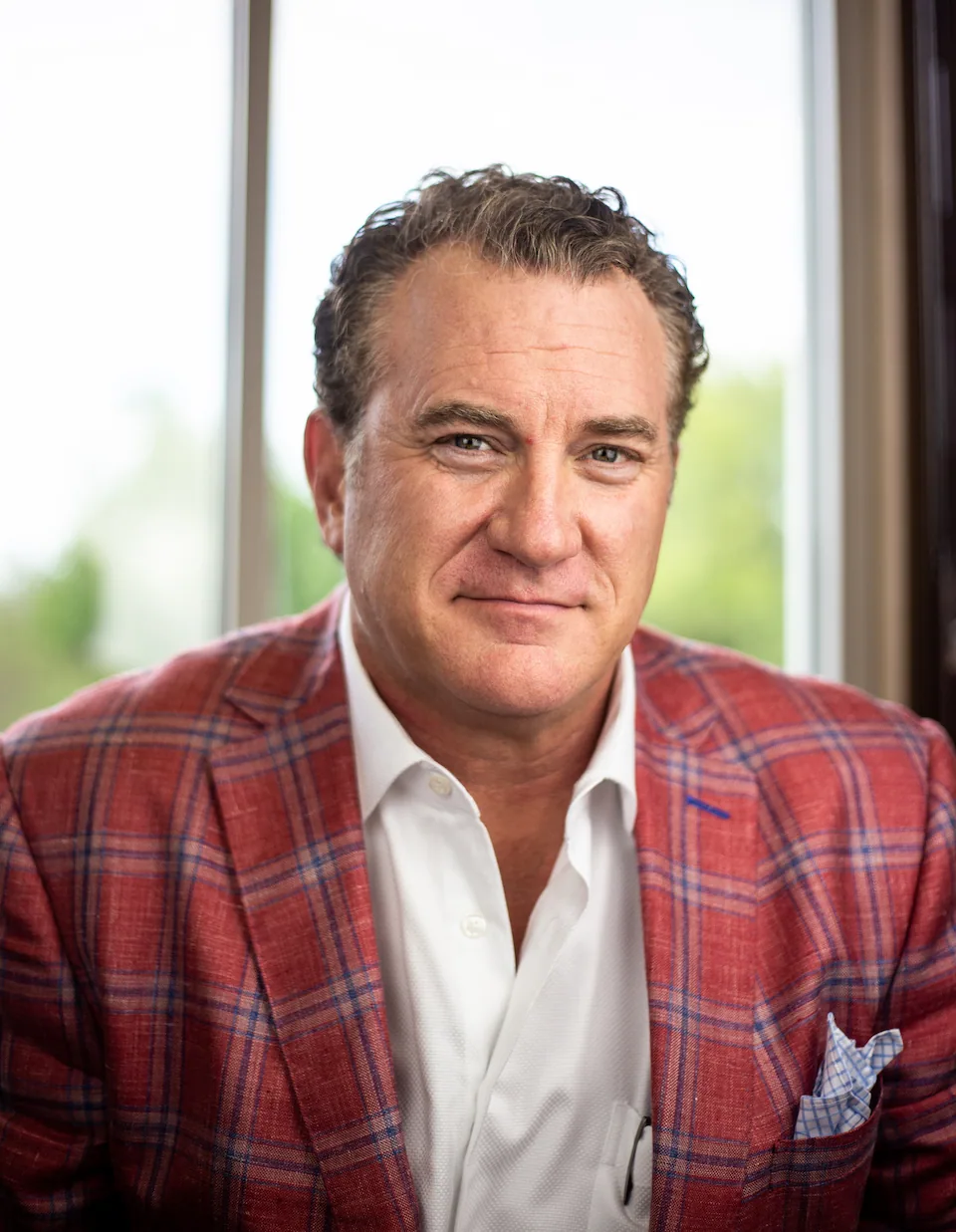
Jason Ledlow
Chief Executive Officer and Co-Founder
Jason has over 30 years helping nonprofits raise money and coaches multiple nonprofit leaders each week.
You Might Also Like
Why Your $200K Nonprofit Will Always Be a $200K Nonprofit: The Overhead Truth No One Will Tell You
A founder told James his nonprofit's overhead was 7%. He told them to triple it. Here's the reinvestment math most nonprofit leaders were never allowed to run — and the 90-day plan
Read article3 Common Sources of Organizational Tension (and how to handle it)
This guest post is provided by Elise Woodworth from Woodworth Enterprises.Nonprofit leaders feel tension long before they can name it. A board meeting that feels “off.” A team that
Read articleBook a free session with our CEO.
Plan how to reach your fundraising goal.
Talk with our team about your next event.