
Fundraising
What If You Don't Know Any Wealthy Donors? How Nonprofits Can Find New Fundraising Prospects
One of the most common questions I hear from nonprofit leaders is: "What if we don't know anybody with money?"
It's a fair question. When you're planning a gala, growing a donor base, or trying to secure sponsorships, it can feel like other organizations have access to supporters and connections that you simply don't have.
Whenever this topic comes up, I think about The Giving Tree.
You might remember the story. A little boy keeps returning to a tree throughout his life, and the tree keeps giving. Eventually, there's nothing left except a stump.
Nonprofits have their own version of The Giving Tree.
- The donor who buys a table every year
- The sponsor who always says yes
- The volunteer who somehow manages to be everywhere at once
- The board member who never seems to say no
These people are our "giving trees."
They're wonderful. They make so much of our work possible. But when we start thinking about where future support will come from, they're often the only people we picture.
And since we aren't planning to use them down to their stumps, we must find new giving trees.
The challenge usually isn't that these people don't exist. It's that we need to be more intentional about finding them.
Start By Getting Clear About Who You're Looking For
Before you start asking for introductions or building invitation lists, you need to get clear on who you're actually trying to attract.
Because the goal isn't simply to find people with money.
The goal is to find people who have the capacity to give, care about your mission, and genuinely want to be part of the impact you're creating.
When I work with clients, we spend time going through an exercise to identify what I call their Target Donor DNA. We go deeply into the demographics and psychographics of this person.
The idea is simple: if you had 25, 35, or 45 of your Target Donors sitting in the audience at your gala, it would make a massive impact on your fundraising.
That's the person we're trying to understand.
What do they do for work? What causes matter to them? What kind of impact do they want to make? What stage of life are they in? What keeps them up at night?
The clearer you become about who you're looking for, the easier it becomes to find more people like them.
The Mental Rolodex Changed How I Think About Finding Donors
A few years ago, I learned the concept of a Mental Rolodex, and it completely changed how I think about finding donors or any gala-related resources.
Here's the idea. If you were out to coffee with a good friend catching up, you'd likely tell them about how you're in the thick of planning a gala. And you might ask them: "Do you know anybody with money you can invite to our gala?"
Think about what happens next. Most people struggle to answer.
Not because they don't know anyone. Because that's not how their brain organizes relationships.
People don't typically have a mental category labeled "wealthy people who might donate to a nonprofit."
Instead, they organize people by how they know them.
They think about other parents from school, colleagues at work, neighbors, church members, attorneys they know, people from their cycling club, former classmates, or members of a networking group.
That's their Mental Rolodex.
Once I understood this concept, I realized that finding donors isn't just about asking for introductions. It's about asking better questions.
Let's say your target donor is a successful attorney who cares deeply about education and loves to mountain bike.
Instead of asking: "Do you know anyone with money who'd donate at our event?"
You might ask:
- "Do you know any attorneys through your alumni network?"
- "Who do you know from your office that likes to mountain bike?"
- "Are there any business owners in your networking group who have kids that are still in school?"
Those questions unlock something completely different. People stop trying to think of donors and start thinking of actual human beings they know. And that's where opportunities begin to appear.
Build Your List Before You Need It
Once you're clear on who you're looking for and you've learned how to access people's Mental Rolodex, it's time to start building a list.
Look through your board members' networks. Review your sponsors. Use LinkedIn to see connections. Discover who your vendors know. Pull up your camera roll. Browse your social media connections.
Through the lens of your target donor, start making a list.
Don't worry yet about whether someone is a perfect fit. The goal at this stage is volume. Not every person on the list will return your call. Not every person will attend your event. Not every person will say yes. That's exactly why you want a large list. A big list creates momentum because every time one path closes, you already know where to look next.
This exercise should be done with your board too. One person may think of ten names. A group of engaged board members can often generate a list of hundreds.
Bringing It All Together
If you're looking for more donors, sponsors, or supporters, start here:
- Define your Target Donor DNA
- Identify where those people spend their time
- Create questions that help people access their Mental Rolodex
- Ask those questions to board members, volunteers, supporters, etc.
- Build a prospect list
- Start getting introductions
The Part I Hope You Remember
If you're planning a gala right now and feeling discouraged about where the next donor is going to come from, I want you to know you're not alone. I hear this concern all the time.
But after hundreds of fundraising events, I've become convinced of one thing: there are far more people who want to help than most organizations realize.
The challenge isn't that they don't exist. The challenge is that they don't know you yet.
They don't know your mission. They don't know the impact you're making. They don't know that there's a seat waiting for them at your event or an opportunity to be part of something meaningful.
Some people have more money than time. Some have more influence than money. Some have relationships and networks that can open doors you didn't even know existed.
The goal isn't to find a magical list of wealthy donors. The goal is to get clear about who you're looking for, create a plan to find them, and then have the courage to invite them into your mission.
Because the reality is this: there are people out there who want to make an impact, and they may be waiting for an invitation into the work you're already doing.
And when you start looking beyond the giving trees you've always relied on, you may discover that there are far more people ready to help than you ever imagined.
Looking for more tools and strategies to grow your fundraising results? Explore the Hey Nonprofits! blog for guides, frameworks, and expert insights built specifically for nonprofits, schools, and organizations raising money for causes that matter.
Dani DotterosaDani Dotterosa is a gala fundraising powerhouse who has guided hundreds of nonprofits to raise over $50 million. She initially gained her experience managing fundraising teams on event nights and was later recruited to the team of former Denver Bronco, Reggie Rivers, as his first Benefit Auctioneer. Her collaborations extend to renowned nonprofits such as the American Heart Association, Children's Museum, and Make-A-Wish Colorado, as well as hundreds of smaller groups and schools, making her the go-to expert for all things Gala fundraising. As the creator of The Profitable Gala Program and accompanying Playbook, she specializes in training nonprofit leaders on how to achieve their most successful Galas.
Connect with Dani: Visit the Profitable Galas Blog
You Might Also Like
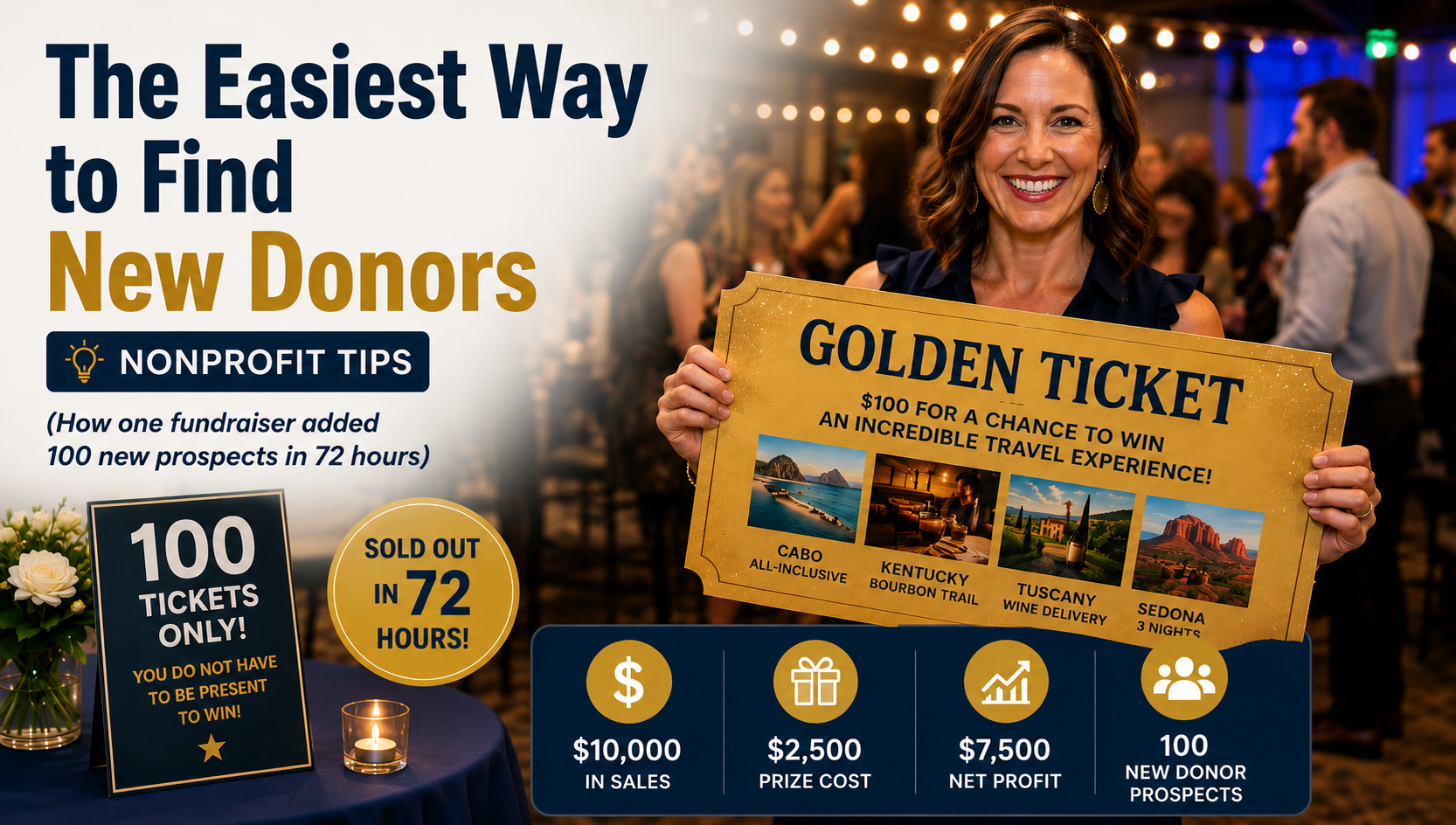
The Easiest Way to Find New Donors - Nonprofit Tips
(How one fundraiser added 100 new prospects in 72 hours)If you’re a fundraiser, you know this truth: Finding new donors is the hardest part of the job.You can steward existing dono
Read article
How to Attract Younger Donors to Your Nonprofit Events
If your gala has run on the same committee for 30 years, the next generation of donors isn't going to wander in by accident. AJ Steinberg explains how to build a bridge on purpose.
Read articleBook a free session with our CEO.
Calculate what your next fundraiser could raise.
Talk with our team about your next event.