
Fundraising
Monthly Giving for Nonprofits: Build a Recurring Donor Program
Your Donors Are Already Subscribers
Look at your own bank statement and you already know where this is going. During a Hey Nonprofits! LIVE episode, recurring giving expert Dave Raley told hosts Trevor Nelson and Jason Ledlow that 95.8% of Americans have a subscription of some kind, and the average person has 12. In a survey he cited, consumers underestimated their monthly subscription spending by $133, and 42% had forgotten about at least one subscription they were still paying for.
The audience guessed anywhere from nine to thirty. One of the hosts admitted to a stack of his own. The point is that people no longer think of a recurring charge as a big commitment. They think of it as normal, and Dave's argument is that charities can finally use that.
This is not just a young-donor story. Dave said 50% of Boomer and Gen X donors, still the core giving generations, already give on a recurring basis. He also cited a national survey where 52% of millennials said they would rather give monthly than make one large gift. His read is that the trend keeps growing as younger donors who grew up with subscriptions become the people writing the checks.
The Three Kinds of Recurring Giving, and Who Got Left Out
Dave started his career 21 years ago at Union Rescue Mission in Los Angeles, and the first program he worked on was a recurring giving program. It was a lot of work, he said, and strangely frustrating, because a social services charity could not get donors to commit on a monthly basis. His explanation is that recurring giving has historically come in three forms.
The first is one-to-one sponsorship, like sponsoring a child through an international relief organization. It is powerful, but most charities do not have the program structure to run it. The second is membership, the zoo, the museum or the public radio station, where the donor gets something back. Also great, but again most charities cannot offer direct benefits. By Dave's math, roughly 75% of charities fall into the third bucket, everyone else, and with about 1.5 million 501(c)(3)s in the US, that is over a million organizations that never had an easy path to recurring revenue.
What changed is the demand side. Dave pointed to his own kids. Their family sponsored a child on each daughter's birthday through large international organizations. When one program graduated and the family was offered the next child, his daughter, then around 11 or 12, thought for a moment and chose to give to a small local nonprofit that brings students from Spain to the US instead. Sponsorship used to be the shiny object, he said. Now a kid can text a friend overseas. Donors are choosing causes on their own terms, and a monthly gift to a cause they care about fits that.
Why a Recurring Donor Is Worth Five to Seven Single-Gift Donors
The numbers Dave shared are the heart of the case, so here they are in one place. These are his figures from the webinar, so treat them as his benchmarks and check them against your own data.
Retention is the first piece. He said the average recurring donor retains at roughly 78% to 86% a year, compared with about 24% for brand-new donors. Flip that around: about 76% of new donors do not give again the next year, and even donors who have given a single gift two or three years in a row still lapse at around 58%. A recurring donor, he said, lapses at around 14%.
Frequency is the second piece. A monthly donor gives about 12 times a year, or closer to 10 once you account for attrition, so a $40 monthly donor is really a $400-a-year donor. Over time he puts the long-term value of a recurring donor at five to seven times that of a single-gift donor.
For napkin math, Dave gave a shortcut. Take the average monthly gift and multiply it by 40. A new $40-a-month donor is a $1,600 donor. A $250-a-month donor is a $10,000 donor.
Third, recurring donors give more on top. Dave said recurring donors give an additional 25%, on average, beyond their monthly commitment. One of the hosts connected that to something auctioneers hear all the time: that if a guest buys in the auction they will not give in the fund-a-need. It usually works the opposite way. Dave said a Masterworks analysis found that every giving-level cohort increased total giving after choosing to give monthly, with the largest donors increasing the most. He has never seen monthly giving cannibalize major gifts.
A $40 monthly donor is not a $40 donor. Do the math on the donors you already have before you decide this is too small to bother with.
Start by Benchmarking, Then Compare Yourself to Yourself
Dave's first recommendation is not to launch anything. It is to find two numbers: how many recurring donors you have today, and how much they give per year in total. You cannot decide where to go until you know where you are.
He told the story of a charity that started working with him on July 1 with eight recurring donors. A month later they had 17. That is more than 100% growth, and it would feel like nothing next to a charity with 80,000 monthly donors. He said that is exactly the trap. Compare yourself to yourself. Another small client hosted a half-day open house, not a fundraising event, where the executive director spoke for about 20 minutes and invited people to stand with the charity monthly. By Dave's math it produced about $10,000 in long-term value from donors who converted that day.
Jason made the same point as a host, and it applies to any small team: consistent effort over time brings the greatest reward. The growth is a snowball. If eight of your first donors keep giving at 80% or better, seven of them are already in next year's budget without you doing anything.
Dave also pushed back on the idea that recurring giving is a checkbox on a donation form. He thinks it deserves the same thought as your annual fund, your major gifts program and your event. It does not require a dedicated team. At many larger organizations with thousands of monthly donors, he said, it is one person's part-time responsibility. It does require a brand, a welcome plan, and a thank-you plan that treats those donors like the long-term partners they are.
Ask Within 30 Days of the First Gift
One question comes up constantly, Dave said: when should we invite a donor to give monthly? After the welcome series? At six months? At a year? His answer, in every case he has seen, is within the first 30 days of their first gift, and in the webinar he later widened it to 30 to 60 days. That feels aggressive until you consider what just happened. The person voted with their wallet, and they are at peak interest.
One host put it in sales language: the best time to sell is right after you sold something. And if you run an event, you have a built-in list of people to call. Dave's suggestion was that your best prospect list is the list of people who just attended your gala. Pick up the phone or send the email inviting them to make their gift monthly.
What a Monthly Ask Looks Like at a Gala
Dave described an event he attended for a local charity that works against human trafficking. It was the first time they had tried a monthly giving ask, and the auctioneer told Dave afterward how nervous he was. During the paddle raise moment, the executive director gave a short speech explaining that the need does not end at the end of the night, and invited guests to help build a bridge for the organization's future by committing monthly. Guests held up big red cards for the monthly commitment instead of a paddle.
Dave sat at a table with a middle school teacher who had never given to the organization. He heard about it at church. When the ask came, the teacher raised his card at $250. Dave's first thought was whether the guy realized he had just signed up for a monthly gift. At that retention rate, 40 times $250 is $10,000. A first-time donor who could not have written a $10,000 check became a $10,000 donor, and, as Dave put it, he was fired up and ready to tell everybody.
Trevor had stumbled onto the same idea years ago as an auctioneer. When he asked who would give $5,000 and the room went quiet, he reframed it: if you cannot write a check for $5,000 tonight, could you give $500 a month over the next twelve months? More hands went up. Different givers needed a different door, not a different ask.
The group also did the paddle-drop math on the call. If 100 guests each drop a paddle into a bowl for a $50 monthly gift, with a prize drawing for one of them, that is $5,000 a month and $60,000 a year. Dave's 40x napkin math would make it more like $200,000 in long-term value.
Get ACH if You Can, and Plan the Follow-Up
One practical detail from Dave: credit card recurring gifts churn, with something like 20% to 25% of cards turning over in a year because of expirations, fraud flags and payment issues. ACH bank draft is the gold standard for recurring giving. If your event platform allows it, offer bank draft as the default option, and plan a card-update process for the rest. He also warned that budgeting apps now show recurring donations alongside Netflix, which means donors will see your gift on their screen every month and may be asked whether they still want it. Plan on that by making your thank-you and impact updates frequent enough that the answer is yes.
As the Hey Nonprofits! hosts pointed out, in-person events may be the most underused place to start these gifts. Trevor's summary was that events are the best way to cultivate this kind of sustainable giving because donors are feeling the mission in the room. Dave agreed: every benchmark report for the last three years has named recurring giving as a bright spot, and he thinks events are an untapped space.
Your Next Steps
You do not need to build a full program this month. Here is a sensible order to work in.
First, count your recurring donors and their annual total. Second, pick one existing touchpoint, like your next event or your first-gift welcome series, and add one monthly invitation to it. Third, choose a name for the program so it feels like something donors join, not a checkbox. Fourth, set up the follow-up. Anyone who gave for the first time in the last 30 to 60 days gets a personal invitation to make it monthly. Dave also offered attendees a 20-page, seven-step guide to growing recurring giving along with his book.
Do the 40x math on your own average gift. If it surprises you, you have your answer for why this deserves a spot on your calendar.
Insights in this article are drawn from the Hey Nonprofits! LIVE webinar “Half Your Donors Already Give Monthly (But Not To You)”, featuring recurring giving expert Dave Raley.
About the author
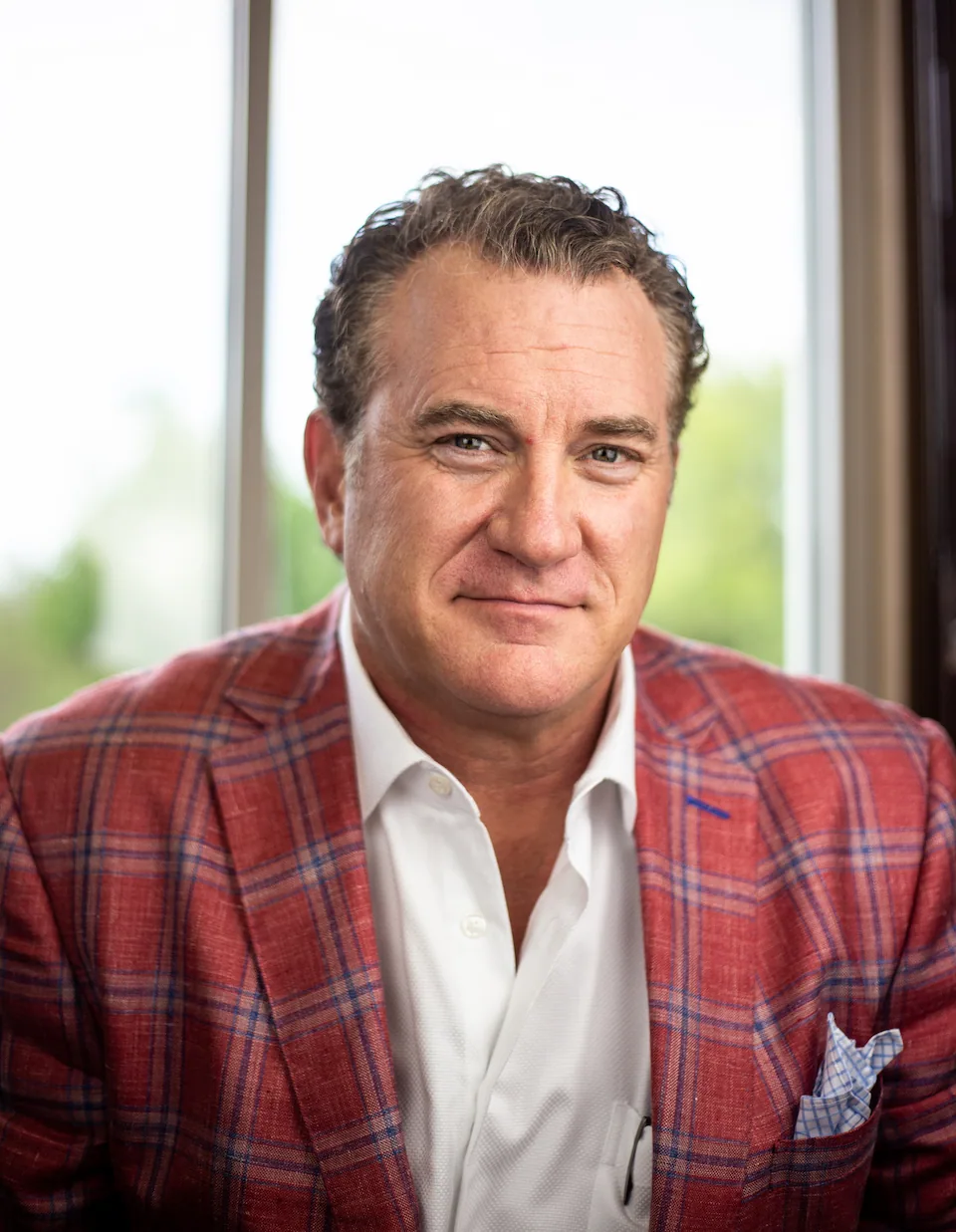
Jason Ledlow
Chief Executive Officer and Co-Founder
Jason has over 30 years helping nonprofits raise money and coaches multiple nonprofit leaders each week.
You Might Also Like
How to Ask Major Donors for More Without Freezing Up
Asking for too little can hurt a donor relationship more than asking for too much. Fundraising coach Julie Ordoñez explains how to ask bigger, own the awkward moments and keep your
Read articleHow to Plan a Fundraising Gala in 60 Days with No Donor List
A brand-new development director had no donor list and about two months to a gala. Alexandra Katzenstein shares what she did, from the prospect list to a 40-minute fundraising prog
Read articleBook a free session with our CEO.
Calculate what your next fundraiser could raise.
Talk with our team about your next event.