
Storytelling & Mission Messaging
Nonprofit Brand Clarity: Why Clear Beats Clever
The Complaint Donors Make Most
If your fundraising feels harder than it should, Kevin Brown has a diagnosis you may not like: donors don't understand what you do. Kevin is a co-founder of Mighty Ally, a brand and communications firm for small and early-stage nonprofits, and the author of a new book on the subject. He joined Trevor Nelson on the Hey Nonprofits! podcast to talk about what he's learned.
According to Kevin, donors raise two complaints most often. The first is that they don't understand what you do. The second is that they don't understand how you're different from everyone else they already fund. He sums up the principle in a line from his book: "Difference equals donations." And his advice for the first step in fundraising is surprising: "The first step in fundraising is not fundraising." You start by getting clear on your reason for being, whatever you call it.
Think Like a Charity, Act Like a Business
Kevin's team comes from the private sector. He mentioned working with Apple and fintech startups, and the founders applied those brand and messaging lessons to the social sector after the orphan crisis opened Kevin's eyes to poverty and injustice. His take on the old line that nonprofits should act more like businesses: "think like a charity, act like a business." A nonprofit is a business, he said. The only difference is a tax exemption.
Trevor agreed, and added that terms like 501(c)(3) or nonprofit are designations that shouldn't lead your message. Kevin also noted that most nonprofit leaders weren't trained in brand building or fundraising. He cited an estimate that about 80% of nonprofits at this growth stage are led by first-time CEOs, who are often teachers, doctors or lawyers by training. That's why he believes the CEO's job includes raising money. In his book he calls it the chief earning officer.
Mini takeaway: Your nonprofit is a business with a tax exemption. Use the same clarity about message and positioning that any good business would.
The Chief Earning Officer
One of Kevin's more provocative ideas is that a nonprofit CEO is the "chief earning officer." Programs, product and innovation are part of the job, he says, but there's an overlap with fundraising that comes with the seat: you are the cash catalyst. His blunt conclusion is that if a leader only wants to focus on programs, they might be better suited to a head-of-programs role, and the organization should hire a CEO who is willing to raise money.
Why do so many leaders avoid it? Kevin gave two reasons. Most leaders don't have a business, brand or fundraising background, so it isn't in their DNA. And there's a legacy imbalance between who has the money and who is asking for it. He and his co-authors wanted to shift that dynamic, and one principle in the book is that you, the nonprofit, are the prize. Donors aren't just giving a grant. They're gaining a grantee, or better yet a partner. Kevin said they expected donors to bristle at the idea, and the opposite happened: donors applauded. They're investing in you, and the communities you serve are the heroes.
Kevin noted that the imbalance can be unfair, and he pointed to Dan Pallotta's well-known TED talk about the way we think about charity, which argues that charities play by a different rulebook than the private sector, including on pay and marketing spend. But he also reminded listeners that donors are people. Whether someone gives $10 or $100,000, they share the same motivations and prefer to be communicated with the same way you'd want to be.
Mini takeaway: Fundraising is part of the CEO's job description. Treat donors as partners investing in you, not as people you're asking for a favor.
The Eight-Word Mission
The simplest tool Kevin shared is an eight-word mission statement, borrowed from a California-based funder. It's a forcing function: when your team has to debate which words stay, you get to the core. In his workshops, people chat in their 11- or 12-word versions, and he tells them to keep working until it's eight. His point is that "simple is not simplistic."
Trevor offered his own version: ten words, or even the first ten seconds. He shared an example from a workshop with a children's oncology camping association, where the answer was essentially "we send kids with cancer to camp." Trevor added that the statement can be revisited every 90 days or six months with your board.
What about organizations that do many things? Kevin gave an example from a group in rural Uganda that began sheltering orphans and then added a school, a health center, clean water and a grandmothers' program. The fix was to find a red thread, in their case the child, and tell everything through it. Donors need to understand about 10% of the iceberg above water before they care about the 90% below. Most organizations, he said, try to tell the whole iceberg at once. "A confused donor always says no."
Communicate Before You Ask
The gratitude discussion produced two of the most practical points. Kevin said the data shows that two big reasons people don't give again are that they weren't thanked and weren't told how their gift was used. Both are simple. Trevor's rule of thumb, which Kevin said also appears in his book, is to thank your donors seven times before you ask for money again.
Kevin also suggests dropping the labels. Instead of cultivation and stewardship, which can leave a CEO wondering what a team actually does, call it communications, which is what it is. He also described a basic gap he's found at clients: their donors weren't even receiving the monthly newsletter because no one had exported donors from the donor tool into the email platform. "You might not need a 100% overhaul. It might just be 100 things 1% better."
Kevin's point was that you might not need a full overhaul. Doing 100 things 1% better can add up to 100%. Trevor's version of the same advice: if you don't know what to say to a donor, start with thank you, and remember that no news is not good news. Donors know you care, but they still like to hear it.
For top donors, Trevor's advice was to pick up the phone. Kevin pointed out that foundations, corporate partners and high-net-worth donors often want to be involved beyond their money, since they have skills and networks to contribute. He also spoke about talking to donors as people: they have the same pains and gains as anyone, and some just have more money.
Differentiation Beats Competition
Trevor said a common complaint he hears from clients is that the organization down the street got the big gift, or that a donor didn't give again. His answer is that no one owns their donors. There's a tremendous amount of money in the system, and private and foundation dollars are generally easier to get than federal funding. Kevin added an estimate that US foundations alone have around $1.5 trillion in the bank, and he mentioned the rise of donor advised funds as another source.
That leads back to differentiation. Kevin's view is that competition isn't a dirty word. To compete simply means trying to get something someone else is also trying to get, and it doesn't require tearing anyone down. It means showing how you're different and why you should also get funded. Trevor made a practical point from experience: your competitors down the street are probably not calling the high-net-worth individuals, corporations and private foundations that you can call. Those people will remember the phone call. "Differentiation is stronger than competition."
Kevin put it in two steps for the donor's two complaints: first be clear about what you do, then be clear about how you're different. This is the positioning part of his framework, which asks who you are targeting and what makes you different.
Turn Your Board Into Ambassadors
Boards came up, as they often do. Kevin isn't a board specialist, but he thinks of a team and board as your best brand ambassadors. He pointed to a framework from Kay Sprinkel Grace in which everyone is an ambassador, an advocate or an asker. Not every board member needs to ask for money, but each should be equipped with the message.
He added a point we'd highlight: if people don't know how to talk about what you do, they won't. He credited the speaker Brian Miller for the line. Before you blame board members for not fundraising, ask whether you've given them a clear message. Trevor agreed that it often turns out to be a training issue and not a people issue.
Mini takeaway: Before you ask your board to fundraise, make sure they can explain what you do in a sentence.
Goals Need Routines
The part of the book Trevor liked most was about rhythm: goals without routines are wishes, and routines without goals are aimless. Kevin said nonprofits focus so much on programs and communities that they forget their own organization needs attention. He recommended naming your process and putting it on your website, as one micro-grant organization did with a six-step process. It keeps the team aligned, and donors can see how you work.
Asked to finish Trevor's usual prompt, "fundraising is hard, so don't make it harder by doing what?", Kevin said to stop trying to be so clever. Put down the viral campaign for a minute and focus on being clear. He noted that fundraising is hard in part because the people paying aren't the people receiving the benefit, which is unusual in any market.
Kevin was candid about why fundraising is so hard. He and his co-founders came to the topic by failing at it. Mighty Ally started as a pure nonprofit that planned to do work for small nonprofits for free and raise philanthropic dollars, and it struggled to raise unrestricted funding. That's why they became a hybrid with both a nonprofit and a for-profit side. He also described the hamster wheel many leaders feel stuck on, raising just enough to pay the bills, and said that getting clear about your brand is one way to get off it. The subtitle of his book plays on that: "fix" can mean to correct something and to make it firm over time.
If you try one thing this month, write your mission in eight words, share it with your board and staff, and ask each person to say it back in their own voice.
Where to Learn More
Kevin's book is called Fundable and Findable, and it was only about two weeks old when he recorded the episode. It's built around action steps and client examples, with a suggested 10 minutes a day reading a chapter and 10 minutes doing the work. He said he wanted it to be affordable, around $24 US, so any nonprofit leader can get access to the same expertise. Mighty Ally also runs a self-paced online bootcamp built on the same framework, with video lessons, a workbook and templates, plus consulting and live trainings.
You can find the book at fundablefindable.org. Kevin also writes on LinkedIn every day for free and has a Substack newsletter. As a hybrid nonprofit themselves, he said, they see their role as fighting poverty and injustice alongside their nonprofit partners, not as distant consultants.
Insights in this article are drawn from the Hey Nonprofits! podcast episode “4 Common Mistakes Nonprofits Make When Thanking Donors (And How to Fix Them)”, featuring Kevin Brown, co-founder of Mighty Ally.
About the author
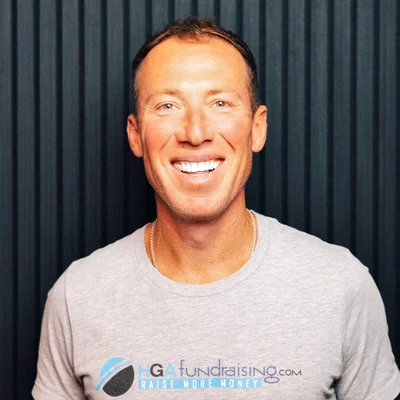
Trevor Nelson
Chief Communications Officer and Co-Founder
Trevor has been helping nonprofits raise more money for over 10 years and hosts the top rated Hey Nonprofits podcast.
You Might Also Like
Ethical Storytelling for Nonprofits: Protecting Story Owners
A story that helped a nonprofit hit its goal also exposed the woman in it. Diana Farias explains how to gather, approve and reuse stories without harming the people you feature.
Read articleLinkedIn Outreach for Nonprofits: Profile and Message Tips
Your profile does the selling and your connection request does the opening. Randy Molland shares how nonprofits can set up both, then keep sponsors warm after they say yes.
Read articleBook a free session with our CEO.
Plan how to reach your fundraising goal.
Talk with our team about your next event.